

Mega Fm & Agency
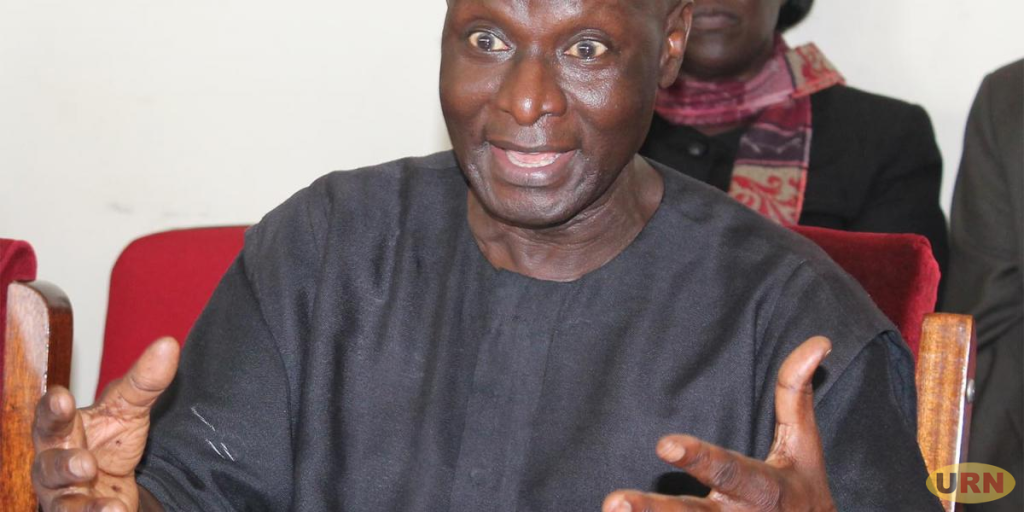
Uganda entered the race for the next United Nations secretary-general with the nomination of Olara Otunnu, more than two months after the country was expected to submit its candidate for the contest.
Otunnu, a former UN Under-Secretary-General and former Foreign Affairs minister, becomes the seventh and final candidate to enter the race to succeed Antonio Guterres, whose second five-year term ends in 2026.
His nomination on 24th July gives Africa two contenders for the position, alongside former Senegalese president Macky Sall, in a contest that comes at a difficult moment for the United Nations. Ambassador Adonia Ayebare noted that Olara Otunnu’s candidature reflects the breadth of experience, statesmanship, and record of consensus-building that the Republic of Uganda considers essential to the Office of the Secretary-General at this juncture.
The race would have attracted eight candidates had Virginia Gamba of the Republic of Maldives not been withdrawn.
The Permanent Mission of the Republic of the Maldives in early March notified the President of the General Assembly and the President of the Security Council that the Government of the Maldives had decided to withdraw its nomination of Gamba.
The next secretary-general will take charge of a United Nations facing some of its deepest challenges since its creation, from wars in Ukraine, Gaza, Sudan and the Democratic Republic of Congo to climate change, artificial intelligence, migration and a growing crisis of confidence in global institutions.
The secretary-general commands no armies and writes no laws. The office depends largely on persuasion, diplomacy and the ability to bring together 193 member states to find common ground.
The office carries significant moral weight but limited formal power. The secretary-general commands no army and passes no laws, relying instead on diplomacy, persuasion and the ability to build consensus among 193 member states.
Otunnu argues that the UN needs a leader who can restore its moral authority and make it relevant in a rapidly changing world. In his vision statement, Otunnu describes the UN as “the only body that represents all of humanity” but says it stands at a historic crossroads requiring renewal.
He argues that the organisation must use its moral authority more strategically, reform its structures and respond to emerging challenges such as artificial intelligence, climate change and widening inequalities.
“The United Nations is once again called upon to fulfil its historic mission,” Otunnu says, describing the moment as “an opportunity to reinvent and to renew and to give the United Nations a new lease on life.”
Otunnu’s agenda places peace and security at the centre of his campaign.
He says the next secretary-general must be a bridge builder capable of bringing adversaries to the negotiating table.
On global conflicts, he proposes urgent diplomatic efforts to address Ukraine, Gaza, Sudan and instability in the Great Lakes region.
He also wants the UN to establish stronger frameworks for artificial intelligence governance, arguing that technology should be harnessed to reduce poverty rather than deepen inequality.
“Climate change should be addressed without sacrificing economic prosperity, technological innovations and energy security,” Otunnu says, arguing that developing countries should not carry disproportionate burdens in the global climate response.
He also places Africa’s development concerns at the centre of his agenda, calling for stronger financing mechanisms for developing countries struggling with debt, limited fiscal space and the effects of conflict and climate shocks.
URN watched the six other candidates debate during a Town Hall debate held at the UN headquarters.
Dr. Olara Otunnu was possibly not in the picture among the contenders when the debate was held. But who are the other contenders? And what are their visions for a troubled institution?
Former Chilean president and former UN High Commissioner for Human Rights Michelle Bachelet says the next secretary-general must defend the organisation while making it more effective.
She argues that the UN remains indispensable despite criticism of its failures.
“The UN is the most remarkable achievement of diplomacy in history,” Bachelet said. Bachelet’s strongest theme is moral leadership. She says the secretary-general must be willing to speak out even when powerful countries object.
“If you permit yourself to be pushed, you are not worthy to be Secretary-General,” she said.
She also argues that human rights must remain central to preventing conflicts and protecting vulnerable populations.
Former Ecuadorian foreign minister and UN General Assembly president Maria Fernanda Espinosa is campaigning on institutional reform and a more integrated approach to global challenges.
She argues that climate change, conflict, development and human rights cannot be handled separately.
“Climate change is not the problem, it is a symptom of a lack of harmony between our consumption and production patterns,” Espinosa said. She wants a UN that is “more modern, leaner, more effective and much more accountable.”
Espinosa also argues that the secretary-general must act as an honest broker capable of rebuilding confidence among member states.
The head of the International Atomic Energy Agency (IAEA), Rafael Mariano Grossi, says the UN needs a leader who can demonstrate that multilateralism still works.
Drawing from his experience managing nuclear diplomacy during the Ukraine war, Grossi argues that influence comes from credibility, not authority.
“The issue is to have a Secretary-General that is really able to do that, to be impartial,” he said.
He cited negotiations around the Zaporizhzhia nuclear power plant as evidence that diplomacy can still succeed even among hostile parties.
Grossi says the UN must become more focused and effective while maintaining its core mandate.
Costa Rica’s Rebecca Greenspan says the organisation’s biggest challenge is restoring trust by delivering results on the ground. Her message is that the UN must move beyond headquarters-driven solutions and empower communities.
“I would like nobody to ask me again, ‘Where is the UN?’” she said, describing her measure of success after five years.
Greenspan argues that reforms must make the UN more responsive to communities and civil society.
She also highlights climate change as a growing peace and security issue, saying displacement and instability increasingly have environmental roots. Caroline Rodriguez Burkett, a Guyanese diplomat and former UN official, presents herself as a pragmatic candidate focused on making the organisation more efficient.
She argues that reform is essential because the UN faces rising humanitarian needs, financial pressure and declining confidence. “The UN is now at a crossroads,” she said.
Rodriguez Burkett says the next secretary-general must strengthen management systems, improve accountability and ensure the organisation better reflects the diversity of its membership.
She also supports stronger global cooperation on artificial intelligence while balancing innovation with concerns about jobs and human rights. Former Senegalese president Macky Sall presents himself as a leader with national, regional and continental experience.
He highlights his roles as Senegal’s president, ECOWAS chair and African Union leader. Sall says the secretary-general’s greatest tool is the ability to bring competing sides together.
“The ambition is that the UN continues to play the role that it has always played,” he said. He argues that restoring trust between major powers and developing countries is essential for the organisation’s survival.
On reform, Sall says the UN must address thousands of overlapping mandates and improve efficiency.
“We need an organist that knows how to play the instrument in harmony,” he said, comparing the UN system to a large musical instrument requiring coordination.
The race is ultimately about more than replacing one secretary-general. It is a contest over what role the United Nations should play in a world where conflicts are multiplying, technology is advancing rapidly, and global cooperation is under pressure.
For Otunnu, the answer lies in renewal. He argues that the UN must recover the principles that created it: Peace, dignity, cooperation and human rights, while adapting to new realities.
“The United Nations is in need of a particular kind of Secretary-General,” Otunnu says. “A Secretary-General who is proactive, is a bridge-builder and is able to propose creative solutions in difficult situations.”
The final decision will be made by UN member states, with the Security Council recommending a candidate for approval by the General Assembly.