

Tolit Ivan & Agency
The government has secured 13 billion Shillings (US$3.5 million) to strengthen biodiversity conservation in the Kidepo Valley National Park landscape, in a major investment aimed at protecting one of Uganda’s richest ecosystems while reducing human-wildlife conflict and improving community livelihoods.
The funding will finance the Kidepo Landscape Integrated Conservation and Development Project (KLICDP), a five-year initiative supported by the Global Environment Facility (GEF) and implemented by the Ministry of Tourism, Wildlife and Antiquities in partnership with the Uganda Wildlife Authority (UWA).
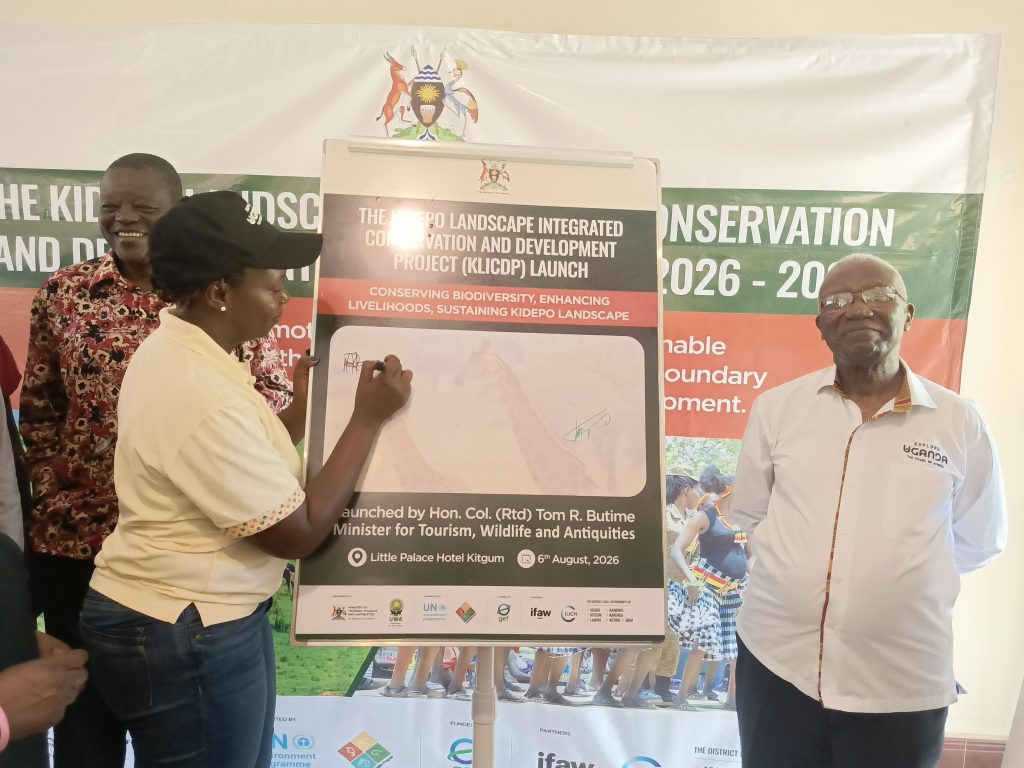
Launching the project in Kitgum Municipality on Thursday, the Minister for Tourism, Wildlife and Antiquities, Tom Butime, said the initiative comes at a time when the Kidepo ecosystem is facing mounting pressure from climate change and increasing human activity.
He identified changing rainfall patterns, prolonged droughts, bush burning, habitat degradation, invasive species, unsustainable harvesting of forest resources and rising human-wildlife conflict as some of the biggest threats undermining conservation efforts.
“These are complex challenges that no single institution can solve alone. They require coordinated action across sectors, partnerships with communities, development partners, civil society organisations and the private sector,” Butime said.
He noted that although Uganda is geographically small, it harbours more than half of Africa’s biodiversity, making conservation critical not only for environmental sustainability but also for tourism and national economic development.
“The Kidepo ecosystem is one of Uganda’s most spectacular landscapes. It supports internationally important wildlife populations, unique habitats, watersheds, forests and pastoral and agro-pastoral communities whose livelihoods are intricately linked to healthy ecosystems,” he said.
According to Butime, the project seeks to strengthen biodiversity conservation, restore degraded ecosystems, combat illegal wildlife trade and support community-based conservation initiatives that promote sustainable livelihoods.
He urged all implementing partners to ensure transparency, accountability and prudent management of project resources throughout the five-year implementation period. State Minister for Tourism, Wildlife and Antiquities Susan Nakawuki said the success of conservation efforts will depend largely on communities embracing peaceful coexistence with wildlife.
She acknowledged that human-wildlife conflict remains one of Uganda’s most pressing conservation challenges, with frequent reports of elephants and buffaloes destroying crops, damaging property and causing fatalities in neighbouring communities.
However, she challenged residents to also confront illegal activities that fuel the conflict, including poaching and encroachment on protected areas.
“Our communities are always complaining, but are their hands clean? People are entering the game reserve to hunt, to poach and to sell game meat. We cannot allow communities to do whatever they want because that way we shall lose these treasured animals that bring significant revenue to the country,” Nakawuki said.
She called on local leaders to take a stronger stand against poaching, saying they have a critical role in changing community attitudes and protecting wildlife resources that also contribute significantly to local economies.
Kitgum District Vice Chairperson Smith Obol welcomed the project, describing it as a timely intervention for communities that have lived with persistent human-wildlife conflict.
He said elephant incursions have become a major threat to livelihoods and public safety, claiming the lives of six women over the past year. The worst-affected areas include Orom East, Kiteny, Orom, Namokora, Mucwini East, Omiya Anyima and Namokora North sub-counties.
According to Obol, the repeated invasions have created widespread fear, disrupted farming activities and kept many children away from school.
While welcoming the initiative, he appealed to the government to complement the project with practical interventions, including constructing an electric fence around vulnerable areas, ensuring prompt compensation for affected families, strengthening wildlife monitoring systems and increasing revenue sharing with host communities.
KLICDP Project Manager Frank Mukalazi said the project will be implemented through three broad components focusing on biodiversity conservation, community participation and sustainable livelihood development.
Kidepo Valley National Park, which borders South Sudan, is one of Uganda’s most biologically diverse protected areas. It is home to more than 77 mammal species and approximately 476 bird species, making it one of the country’s most significant wildlife conservation and tourism destinations.