
Agency
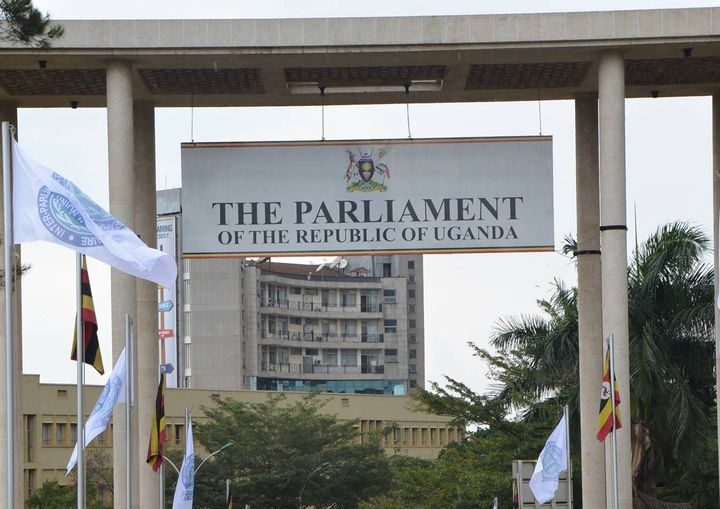
Parliament has adopted a raft of resolutions urging government to expand employment opportunities for young people, provide free sanitary pads in public schools, improve access to sexual and reproductive health services, and increase funding for youth-led enterprises. The resolutions, arising from the Eighth National Youth Parliament held in August, also call for increased investment in vocational training, climate-smart agriculture, youth participation in governance and road safety.
The motion was moved by Eastern Region Youth Representative Judas Thadeo Wanyama during Wednesday’s plenary and subsequently adopted by the House. The resolutions seek to address five major concerns raised by young people during the National Youth Parliament held on August 7, 2026, at Parliament under the theme, “Youth advancing multilateral cooperation through technology and partnerships.”
On employment and economic empowerment, Parliament urged the government to increase funding for Technical and Vocational Education and Training (TVET) institutions and strengthen links between graduates and the private sector to improve their chances of securing employment. The House also recommended the establishment of a dedicated graduate seed fund to provide start-up capital to university and other tertiary institution graduates, enabling them to establish businesses instead of relying solely on formal employment.
Government was further urged to improve young people’s access to land, agricultural inputs, markets, extension services and affordable financing to encourage participation in agriculture.
The resolutions also propose increasing funding to each parish under the Parish Development Model (PDM) to accelerate job creation and enterprise development in line with the Fourth National Development Plan.
Parliament further wants every PDM beneficiary to undergo between one and two months of skills training to improve the utilisation of funds and enhance the sustainability of supported enterprises. On education, the House called for the full implementation of the Competence-Based Curriculum to equip learners with practical and marketable skills. It also recommended the introduction of skills training at secondary school level and the establishment of additional skilling hubs offering information technology training.
The resolutions also call for government programmes targeting young people to be made accessible to persons with disabilities through information in appropriate formats and the provision of assistive devices. On sexual and reproductive health, Parliament urged the Ministries of Health and Information and Communications Technology and National Guidance to roll out community-based, age-appropriate sexual and reproductive health education in every village.
The proposed programme would involve local leaders, youth structures, Village Health Teams and community media to improve access to information among adolescents and young people. The House also recommended the recruitment, training and deployment of young people in health facilities and community programmes to provide confidential and non-judgmental sexual and reproductive health services.
Government was further urged to provide free sanitary pads in public primary and secondary schools while supporting the production and use of reusable alternatives. The resolutions also call for comprehensive sexuality education to be integrated into the curriculum of all secondary schools and delivered by trained teachers.
Parliament wants every sub-county to have a functional health facility equipped to provide basic sexual and reproductive health services to adolescents and young people. The House also called for stronger collaboration between schools, health centres and communities to improve adolescent health, counselling and referral services.
To address teenage pregnancies and school dropouts among girls, Parliament urged the government to enforce laws against child marriage and teenage pregnancies, provide scholarships and establish mentorship programmes to keep girls in school. On climate change, the House called for dedicated funding for youth-led initiatives, particularly in green energy, renewable technologies and climate-related enterprises.
The resolutions also propose supporting community-based projects such as tree planting, wetland restoration and climate adaptation initiatives led by youth groups. Government was further urged to invest in waste disposal and recycling facilities in schools, markets and communities while enforcing waste management by-laws. The House also recommended strengthening agricultural extension services to equip young farmers with skills in climate-smart agriculture, irrigation and sustainable land use.
In addition, Parliament called for regular climate impact assessments in every district to inform urgent mitigation and adaptation interventions. On governance, the resolutions urge government to deliberately involve young people in the formulation, review and implementation of policies and laws at national and local government levels. The House also wants youth leaders in different structures to receive induction and continuous capacity-building programmes to strengthen their participation in public affairs.
Government was further urged to create more opportunities for young people to serve in governance and decision-making bodies, including District Service Commissions. On road safety, crime prevention, access to justice and service delivery, Parliament called for adequate funding of existing systems within the Uganda Police Force, local governments and other relevant government agencies.
The Eighth National Youth Parliament brought together young representatives to deliberate on issues affecting their generation, including unemployment, political participation, reproductive health, climate change, public safety and access to justice. According to the Uganda Population Report 2025, 73.2 percent of the country’s population is below the age of 30, underscoring the significance of youth-focused interventions in national development. The youth resolutions are intended to translate concerns raised by young people into policy recommendations and government action.