
Mega Fm & Agency
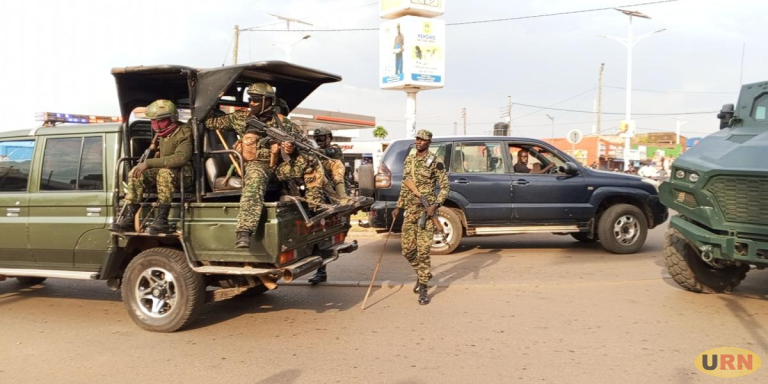
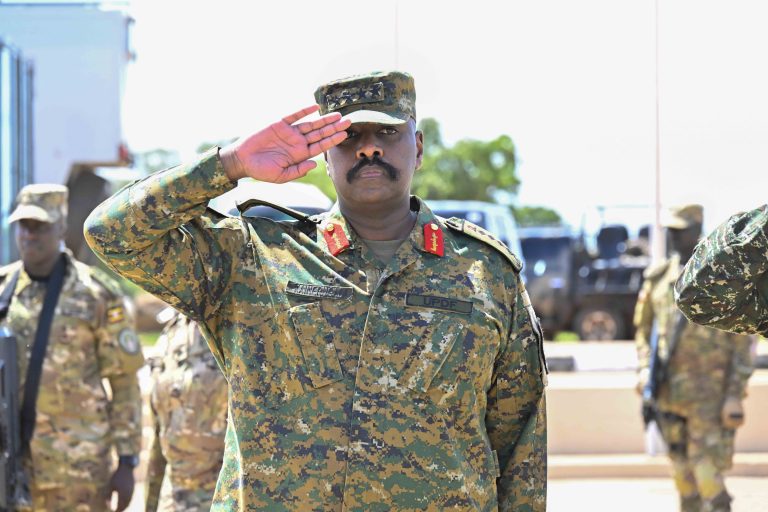
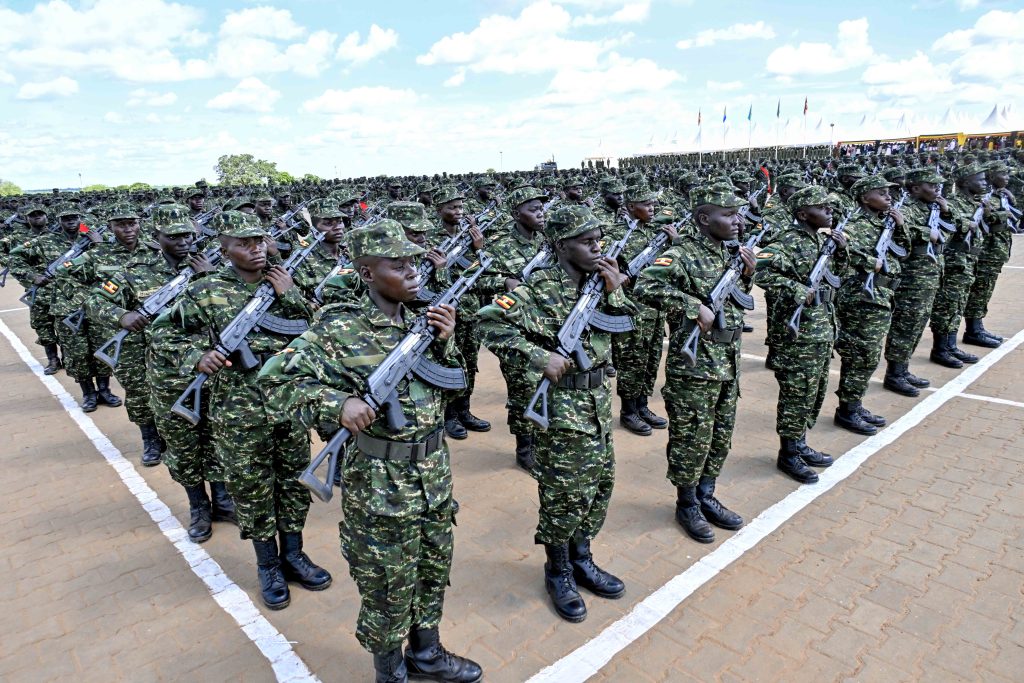
Parliament on Thursday approved the deployment of the Uganda People’s Defence Forces (UPDF) to the Gaza Strip after a heated and deeply divided debate.
The motion, introduced unexpectedly during plenary by the Minister of Defence and Veteran Affairs, Kiryowa Kiwanuka, triggered fierce procedural objections from Opposition legislators, who accused the government of ambushing Parliament.
The deployment was presented under Section 38 of the Uganda People’s Defence Forces Act, which empowers the President to deploy UPDF troops outside Uganda for peace support operations, subject to parliamentary approval.
It is also anchored in Article 210 of the Constitution, which mandates Parliament to regulate the UPDF through legislation, including its deployment beyond Uganda’s borders.
Deputy Speaker Thomas Tayebwa admitted that although the motion had been submitted earlier by the Defence Minister, it had unintentionally been omitted from the day’s Order Paper due to an administrative oversight.
Nevertheless, he ruled that the House should proceed with debate, noting that government business enjoys priority under the Rules of Procedure of Parliament.
“The Minister did his part by submitting the motion in time. The omission was on my side. Parliament’s duty now is to debate and decide, either approve or reject it,” Tayebwa ruled.
Presenting the motion, the Defence Minister argued that Uganda’s proposed deployment is intended to support an International Stabilisation Force established following the devastating conflict triggered by the 7 October 2023 Hamas attack on Israel and Israel’s subsequent military offensive in Gaza.
He cited United Nations Security Council Resolution 2803 (2025), which, according to government, created a transitional “Board of Peace” to coordinate post-war governance and reconstruction in Gaza while calling upon member states to contribute personnel, equipment and financial resources to the stabilisation mission.
The Minister told Parliament that in July 2026, United States President Donald Trump, through several emissaries, formally requested President Yoweri Museveni to contribute a UPDF contingent to the multinational force.
He further disclosed that planning meetings had already taken place between senior UPDF commanders, officials from the U.S. Embassy in Kampala and representatives of the International Stabilisation Force.
Kiryowa defended the deployment as consistent with Uganda’s longstanding foreign policy of supporting regional and international peace operations.
“Uganda has built a strong professional force that has successfully served in Somalia, South Sudan, the Central African Republic and several United Nations peacekeeping missions. Our participation will support ceasefire implementation, protect civilians, facilitate disarmament and contribute to long-term peace and stability,” he told Parliament.
He assured legislators that UPDF personnel would operate under clearly defined rules of engagement, remain politically neutral and comply fully with international humanitarian law.
While few MPs openly opposed Uganda’s participation in peacekeeping missions, several questioned the speed with which Parliament was being asked to authorize deployment into one of the world’s most volatile conflict theatres.
Opposition Chief Whip Paul Mwiru argued that Members had received the Order Paper only hours before the sitting and had insufficient time to study the legal, military and diplomatic implications of the proposed deployment.
Tayebwa, however, rejected calls to defer debate, insisting that Parliament’s responsibility was to deliberate and determine the matter without unnecessary delay.
Following the debate, Tayebwa put the motion to a vote without referring it for further scrutiny.
The majority of Members supported the resolution, formally authorising President Museveni to deploy a UPDF contingent to the Gaza Strip under Section 38 of the UPDF Act.
The decision marks one of Uganda’s most politically sensitive peace support commitments in recent years, extending the country’s already significant military footprint beyond Africa into one of the world’s most contested conflict zones.