

Mega Fm & Agency
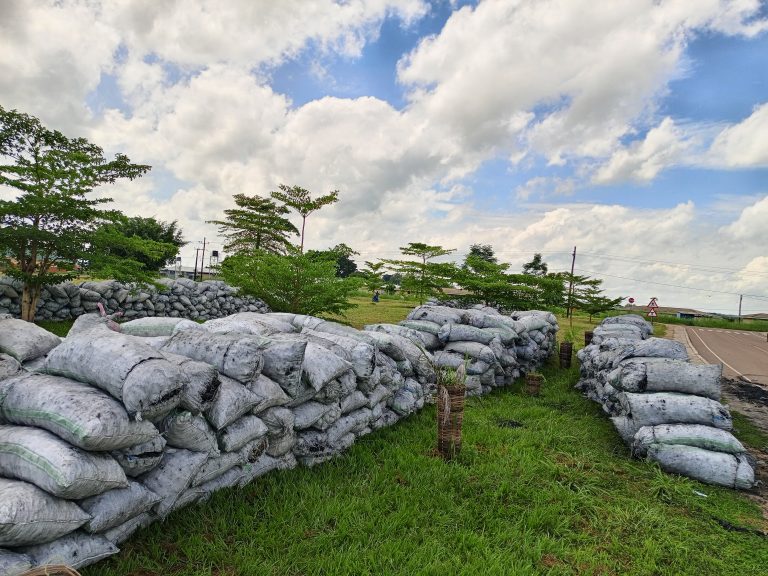
The Uganda Revenue Authority (URA) has admitted that one of its staff members connived with charcoal dealers to issue a genuine cargo seal used to transport illicit charcoal out of Northern Uganda under the guise that it had been imported from neighboring South Sudan.
The matter came up on Tuesday during a meeting in Gulu City, where security and environmental agencies questioned the continued movement of charcoal through border points in the West Nile despite a government ban on commercial charcoal production, trade and transportation.
The ban followed a presidential executive order issued in May 2023 as part of government efforts to curb environmental degradation.
During the meeting, Fourth Infantry Division Commander Maj. Gen. Felix Busizoori questioned how trucks loaded with illicit charcoal from South Sudan were obtaining cargo seals allegedly issued by URA despite the ban.
“A contraband is not supposed to be issued with a seal. But we see seals on these vehicles,” Busizoori said, challenging URA officials to explain how the consignments were being cleared.
He also questioned whether charcoal dealers possessed valid trade licences and movement permits, noting that the trade is banned not only in Uganda but also in South Sudan.
South Sudan banned charcoal production and trade in 2018, although enforcement has been weakened by insecurity and divisions among armed groups in some border areas, particularly in Central and Eastern Equatoria states.
Gen. Busizoori said Ugandan traders were exploiting the situation in parts of Yumbe and Koboko bordering Central Equatoria, where the Sudan People’s Liberation Movement in Opposition (SPLM-IO) remains influential.
Michael Ojja, the Senior Forestry Officer for Acholi and Lango Sub-regions in the Ministry of Water and Environment, also questioned why cargo seals were being issued for consignments covered by a government ban.
Ojja said Ugandan authorities should not facilitate an illegal trade that contributes to the destruction of forest cover in South Sudan.
“Most of the time when we get these trucks, sometimes we break the seal. I don’t know if you can say it is unlawful, but we also have intelligence. Another thing which is happening is these guys go and get the seal without even the URA officials seeing the truck,” Ojja said.
He also questioned the authenticity of documents presented by charcoal dealers to support the transportation of their consignments and called for a thorough investigation.
“These guys should be investigated; the investigating arms are here. We need to see who is issuing those documents because in Uganda we don’t want to be part of looting South Sudan,” he said.
Simon Tumwesigye, URA Customs Manager in charge of Northern Uganda, admitted that a URA staff member was implicated in the issuance of a cargo seal in November 2024 and was subsequently dismissed following an investigation.
“I’m not saying it’s not true, but I want to confirm that it’s actually true,” Tumwesigye admitted.
According to security reports, a truck carrying charcoal was intercepted in November 2024 by authorities in Gulu District.
The truck, which was loaded with charcoal from Lamwo District, had a genuine URA seal and documentation purporting to show that the charcoal had been imported from South Sudan through Ngomoromo border point in Lamwo District.
The documents reportedly indicated that the charcoal had originated from South Sudan’s Eastern Equatoria State.
Tumwesigye said URA had not received any further reports of illegally issued cargo seals being used to facilitate the illicit movement of charcoal from South Sudan since the 2024 incident.
He urged security agencies and members of the public to report any suspicious URA seals found on charcoal trucks.
“I don’t want this information to keep coming, and it portrays the name as if we are facilitating, yet we are actually trying to fight that vice. If you have any seal on site, call me. Call anybody in the leadership of the region, and they come and handle that matter,” Tumwesigye said.
The army has since opened investigations into more than a dozen Ugandan charcoal traders accused of presenting forged documents from South Sudan and violating the ongoing ban on commercial charcoal trade and transportation in Northern Uganda.
The investigation also seeks to establish whether some of the traders were dealing with leaders of the SPLM-IO operating around Kajo Keji Town in Central Equatoria State to obtain illegal documents for the purported charcoal trade.