

Mega Fm & Agency
Leaders of the Greater North United War Debt Claimants Association are preparing to take the government of Uganda to the East African Court of Justice over delays in compensating people who lost relatives, livestock and property during wars in northern and eastern Uganda.
The association, which brings together war-debt claimant groups from Acholi, Lango and Teso, says repeated attempts to engage the government have failed to resolve the compensation dispute.
The association was formed on November 13, 2025, and is led by interim chairperson Julius Ocen, with Julius Oleke as vice chairperson and Moses Ogwang Adonyo as coordinator.
Speaking to the press on August 14, 2026, George Ocan, Treasurer of the Acholi War Debt Claimants Association and an executive member of the Greater North association, said the claimants are preparing to pursue legal action after years of unsuccessful engagements with government.
“We want to use a common front to face government and sit on a round table with them,” Ocan said.
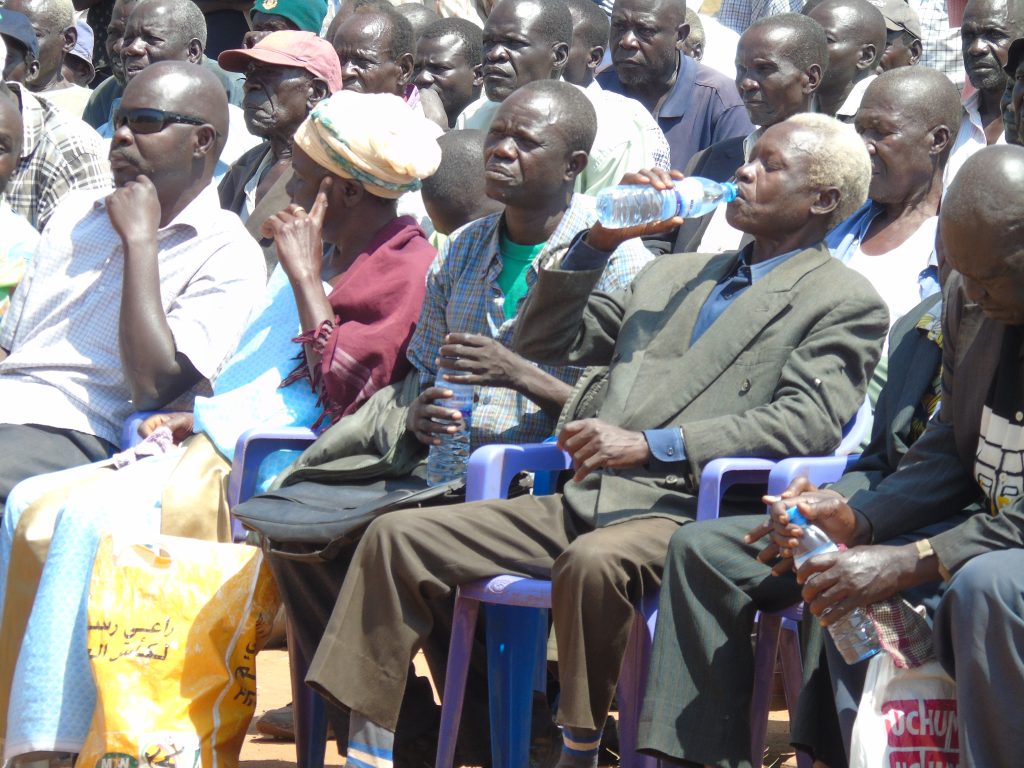
He said the prolonged delay has particularly affected elderly claimants, some of whom have died without receiving compensation for their losses.
Ocan said the association will first seek clarification from the Attorney General before proceeding with the planned case at the East African Court of Justice if the matter remains unresolved.
The claimants say they have also secured a lawyer who has agreed to represent them without charging legal fees.
The association is also challenging the number of beneficiaries recognised by government, arguing that thousands of people affected by the conflicts were left off official lists.
Figures presented by the Greater North association put the number of claimants at 225,243 across the three sub-regions.
The association says Teso has 134,502 claimants, Lango 69,475 and Acholi 21,266.
The figures are substantially higher than those previously presented before Parliament, which put the number of verified claimants at 92,634, comprising 33,664 in Teso, 42,024 in Lango and 16,946 in Acholi.
Julius Oleke, the association’s vice chairperson, attributed the difference to what he described as gaps in the government’s verification process.
“The people who were affected but were not recorded by the government are also there. That is why our figures are higher,” Oleke said.
The association is demanding a fresh verification exercise and a forensic audit to establish the actual number of people affected, those who have been paid and the outstanding liability.
The dispute has also centred on the government’s cattle-restocking programme in the affected sub-regions.
Felix Labeja, Secretary of the Acholi War Debt Claimants Association, said the compensation campaign dates back to 2005, when the association was formed to pursue compensation for people who lost relatives, livestock and household property during the conflicts.
He said the claimants later went to court in 2008 after efforts to resolve the matter through negotiations failed.
Labeja said the claimants valued their losses at Shs150,000 for a goat, Shs150,000 for a sheep, Shs250,000 for a pig and Shs1.05 million for cattle.
According to records presented by the Acholi association, the reported losses included 187,073 goats, 140,587 sheep, 7,945 pigs and 886,134 cattle.
Labeja said the claimants want monetary compensation for their losses and reject cattle restocking as an alternative.
“Restocking is different from war debt compensation and they should not be mixed,” he said.
The position comes as the government continues implementing cattle-restocking programmes in the affected areas.
According to the government’s 2025/26 budget speech, Shs142.9 billion had been paid to 53,592 claimants since the financial year 2021/22, while another Shs80 billion had been provided for the remaining claimants.
However, the claimants insist that the cattle-restocking programme should not be used to settle the separate war-debt liability.
State Minister for Northern Uganda Beatrice Akori has also said cattle restocking and war-debt compensation are separate government programmes.
She has indicated that Acholi would be covered under the war-compensation programme despite the pause in compensation payments.The claimants are also questioning the management of beneficiary lists and previous payments.
Labeja alleged that lists prepared during the compensation process were kept for several years before being displayed, creating room for names to be altered or removed and the number of animals recorded against some claimants to be reduced.
He further alleged that some people who were not entitled to compensation were paid while genuine claimants were left out.
The association is demanding an audit showing the names of beneficiaries who have been paid, the amounts received and the outstanding balance.
Government records confirm that payments have been made to war-debt claimants, with the Ministry of Justice responsible for administering the programme.
Parliament has also repeatedly scrutinised the government’s liability to the claimants.In its FY2023/24 policy statement, the Ministry of Justice planned to process Shs30 billion for war-debt claimants.
A parliamentary review also raised questions about inconsistencies in the figures presented by government.
The committee reported that the Ministry of Justice’s verified payment list showed an outstanding liability of Shs208.72 billion as of June 30, 2024, compared with the higher figure of Shs472 billion previously presented to Parliament.
The committee also identified a discrepancy between the amount reported by the Attorney General as having been paid and the amount that could be verified.
The conflicting figures have strengthened the claimants’ demand for an independent audit of the entire compensation programme.
Oleke also accused some local government officials, including Resident District Commissioners and District Internal Security Officers, of interfering with the association’s activities and intimidating its members.
He warned that the association would pursue legal action against officials found obstructing its work.
The association says its immediate priority is to formally engage the Attorney General through court summons before escalating the matter to the East African Court of Justice.
Ocan said the ultimate objective is to ensure that genuine beneficiaries receive compensation and are able to rebuild their livelihoods after decades of losses caused by conflict.“We want compensation to be done so that our people can recover economically,” he said.