
Agency
In a bittersweet reflection on a quarter-century of reconciliation, Justice Peter Onega, Chairperson of the Uganda Amnesty Commission (UAC), announced that more than 28,340 former combatants have been granted amnesty since the program’s inception in 2000. Justice Onega described a national transformation in which former rebels have exchanged guns for tools, returning to villages as carpenters, farmers, traders, and entrepreneurs.
“This is not just about forgiveness; it is about rebuilding lives and communities shattered by decades of conflict,” Onega said, underscoring the Commission’s mandate to demobilize, resettle, and reintegrate ex-combatants. Uganda’s Amnesty Act was enacted in 2000, at the height of protracted insurgencies following the rise of the National Resistance Movement government in 1986. Designed as a conflict-resolution tool, the law offers a blanket pardon to rebels who renounce armed struggle and pledge allegiance to the Constitution.
Initially passed for six months, the Act has been repeatedly extended, most recently for three more years, as armed groups continue to operate in and around the Democratic Republic of the Congo, Sudan, and the Central African Republic. The largest share of beneficiaries comes from the Lord’s Resistance Army (LRA), once led by Joseph Kony, accounting for 13,605 returnees. Other groups include: West Nile Bank Front (WNBF) – 6,580; Uganda National Rescue Front II (UNRFII) – 3,250; Allied Democratic Forces (ADF) – 2,764, and 2,140 from 26 smaller, now-defunct insurgent outfits.
“Demobilization is the process of releasing someone from service in an armed force. That person should then start a new life as a civilian,” Onega explained. The Commission revealed that since 2000, up to 24,003 former fighters have received resettlement packages, including household items and agricultural tools, while 25,337 have undergone reintegration support, including vocational training in carpentry, tailoring, and agriculture.
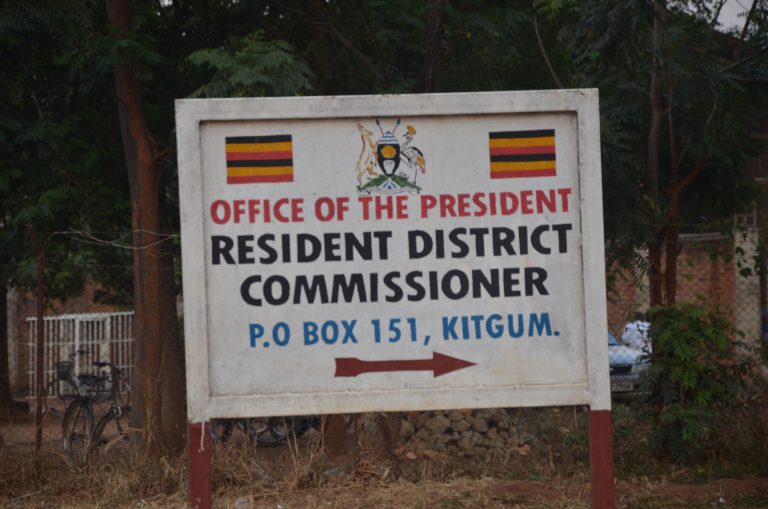
In 2002, the Commission chaired dialogue efforts that led to the demobilization of 2,500 UNRFII fighters in Uganda’s West Nile region, one of its most cited diplomatic successes. Six regional offices in Gulu, Arua, Kitgum, Mbale, Kasese, and Kampala now coordinate sensitization campaigns and receive defectors. Fighters inside Uganda without pending charges may report to local authorities, army units, or religious leaders. Those abroad can approach Ugandan diplomatic missions.
Despite the milestone, Onega acknowledged unresolved challenges. At least 3,001 ex-combatants remain in backlog for reintegration support, while 4,337 await resettlement assistance. Stigmatization, particularly of women and formerly abducted children, continues to hamper full community acceptance. Physical disabilities and psychosocial trauma add further complexity.
Crucially, elements of the LRA and ADF remain active outside Uganda’s borders. “We would like them to come back home,” Onega urged. “If they fear to come out, there are people or places they can approach who will deliver them to the Amnesty Commission.” While the Amnesty Act has significantly weakened insurgent ranks and encouraged defections, critics argue that blanket pardons risk undermining accountability for grave crimes.
In 2012, a partial lapse of amnesty coverage for LRA fighters triggered fears that defections would decline, before the law was reinstated in 2013. Lyandro Komakech, Senior Researcher and Advocacy Officer on Human Rights and Transitional Justice issues and former Member of Parliament for the then Gulu Municipality in the 10th Parliament, contends that in a resource-constrained country emerging from decades of war, incentivizing surrender has saved lives and stabilized communities. “Reconciliation must eventually confront deeper questions of accountability and reparations,” he cautioned.
Meanwhile, on the contrary, other opponents of the move argue that victims of abduction, killings, and sexual violence deserve more than reconciliation without prosecution. The debate remains central: Can amnesty deliver sustainable peace without sacrificing justice? As insurgencies increasingly spill across porous African borders, Uganda’s amnesty framework is often cited as a pragmatic peace-building model, though not without flaws.
With 28,340 former fighters now formally pardoned, the program represents one of Africa’s longest-running reintegration initiatives. Yet its future impact will depend on sustained funding, regional cooperation, and a delicate balance between forgiveness and justice.